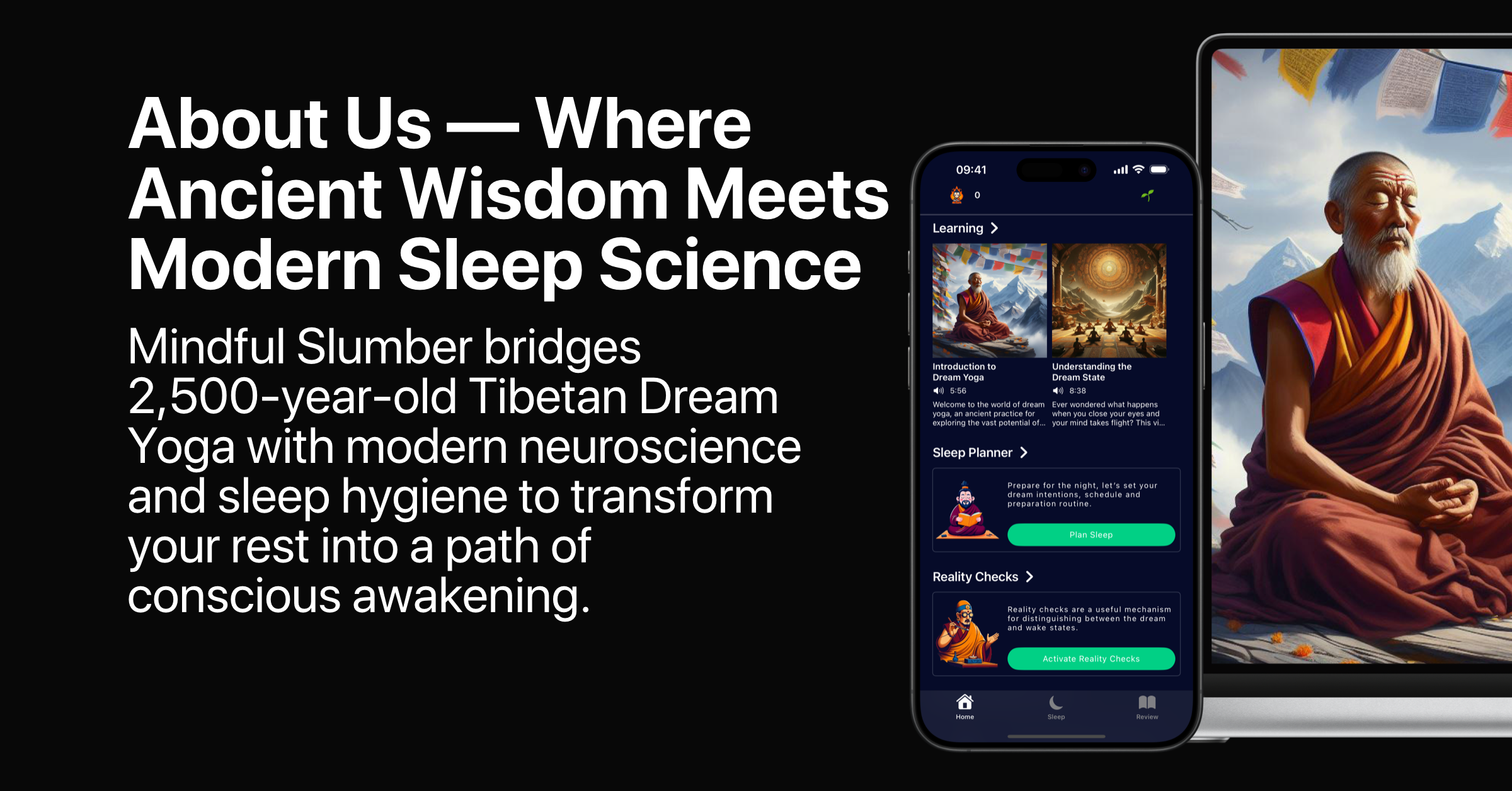
Imagine having the power to transform your nightmares into adventures, tap into boundless creativity to solve problems, or explore the depths of your own consciousness. While it might sound like fantasy, all this is possible through the ancient practice of dream yoga.
Dream yoga, rooted in Tibetan Buddhism, is about far more than just becoming aware that you’re dreaming (known as lucid dreaming). It offers a path to cultivate awareness and a sense of control within the dream state. The ultimate goal is to recognize the dreamlike nature of reality even in our waking lives. Dream yoga teaches us that the world around us is not quite as solid as we think.
Dream yoga is a profound practice, but only if approached with the right intentions. Many people crave lucid dreaming for frivolous reasons – battling dragons, rekindling old flames, or playing god. This desire, fueled by ego and attachment, makes stable lucid dreaming impossible. The true goal of dream yoga is to grasp the illusory nature of reality.
In this guide to dream yoga, you’ll learn:
- What dream yoga is and how it differs from lucid dreaming
- The origins of this practice in Tibetan Buddhism and the Bön tradition
- The benefits of dream yoga, backed by modern sleep science
- Step-by-step techniques to start your own dream yoga practice
- Answers to common questions about safety, timing, and results
What Is Dream Yoga?
We spend approximately one-third of our lives asleep. Rather than viewing these hours as lost time, dream yoga transforms them into opportunities for spiritual growth and self-discovery.
Dream yoga (Tibetan: milam) is an advanced meditation practice of Tibetan Buddhism that trains you to stay fully aware while you dream. Unlike simple lucid dreaming — which only requires recognizing that you’re dreaming — dream yoga uses the dream state as a vehicle for spiritual development, emotional healing, and a direct understanding of the nature of mind.
While lucid dreaming involves becoming aware that you’re dreaming while still in the dream state, dream yoga takes this awareness further by using it as a vehicle for spiritual development and deeper understanding of consciousness. Think of lucid dreaming as the doorway and dream yoga as the entire house you explore once you step through.
All phenomena are like a dream, an illusion, a bubble, a shadow, like dew or a flash of lightning; thus we shall perceive them.
— Diamond Sutra
At its core, dream yoga teaches us that both our dreams and waking experiences are fundamentally illusory in nature. The practice helps us recognize that the seemingly solid world we navigate daily shares the same ephemeral quality as our dreams. This recognition aligns with the Buddhist concept of sunyata (emptiness), which suggests that all phenomena lack inherent, independent existence.
Think of dream yoga as being closely related to meditation. Both practices cultivate mindfulness, encouraging you to observe your thoughts, feelings, and experiences without becoming attached to them. This mindful awareness, when carried into the dream state, unlocks profound opportunities for inner transformation. If you’re curious how dream yoga compares with sitting meditation, our guide to dream yoga vs. meditation explores the differences in detail.
The Six Realms of Dream Yoga
Traditional Tibetan dream yoga identifies six progressive realms of practice:
- Recognition: Becoming aware that you’re dreaming while in the dream state
- Transformation: Learning to alter dream content and environments consciously
- Realization: Understanding the dreamlike nature of waking reality
- Meditation: Practicing formal meditation techniques within the dream state
- Fearlessness: Confronting and transforming challenging dream scenarios
- Integration: Applying insights from dream yoga to waking life
By progressing through these realms, practitioners develop greater control over their consciousness both during sleep and wakefulness, ultimately leading to profound spiritual insights.
The Role of Karma in Dreams
In Buddhist philosophy, karma (Sanskrit: कर्म) refers to the law of cause and effect that governs our experiences. Within the context of dream yoga, karma plays a significant role in shaping both our dream experiences and how we can work with them spiritually.
Karmic Imprints and Dream Content
According to traditional teachings, our dreams are not random but reflect the karmic imprints (Sanskrit: vasanas) accumulated through our thoughts, actions, and experiences. These imprints create habitual patterns that manifest in our dreams in several ways:
- Dream Themes: Recurring dream scenarios often reflect karmic patterns that require attention or resolution
- Dream Characters: People who appear in dreams may represent aspects of our karmic relationships
- Emotional Tonality: The emotional atmosphere of dreams often reflects karmic residue from past experiences
Master dream yoga practitioner Tenzin Wangyal Rinpoche explains that “our dreams are colored by our karma—they are not separate from the causes and conditions we have created in our lives.”
Working with Karma Through Dream Yoga
Dream yoga offers unique opportunities to work with karmic patterns:
Recognition of Patterns: By becoming lucid in dreams, practitioners can observe karmic patterns directly, recognizing how certain thoughts and emotions habitually arise
Purification: In the dream state, practitioners can consciously transform negative karmic imprints by responding differently to challenging dream scenarios
Liberation from Habitual Reactions: The dream state provides a laboratory for breaking free from automatic responses that perpetuate karmic cycles
Accumulation of Positive Karma: Traditional texts suggest that virtuous actions performed in lucid dreams generate merit similar to waking actions, though with less karmic weight
The 17th-century Tibetan master Karma Lingpa taught that “awareness in dreams can burn the seeds of negative karma like fire burns wood.” This perspective emphasizes that dream yoga is not merely a psychological practice but a means of spiritual transformation that affects our karmic trajectory.
Dreams as Karmic Preview
Some Tibetan Buddhist traditions view dreams as offering glimpses of potential future circumstances shaped by our karma. From this perspective, paying attention to dream content can reveal karmic tendencies that are ripening, allowing practitioners to make adjustments in their waking lives to create more favorable conditions. To work with the messages in your dreams, see our guide to dream interpretation in Buddhism.
By working consciously with dreams, practitioners can begin to loosen the grip of karma on their consciousness, developing greater freedom both in dreams and waking life. This process aligns perfectly with the ultimate goal of dream yoga: recognizing the dreamlike nature of all phenomena and awakening from the sleep of ignorance.
The History and Origins of Dream Yoga
Dream yoga has its roots in Tibetan Buddhism, particularly the Bön tradition that predates Buddhism in Tibet and the later Vajrayana Buddhist practices. The techniques were formally systematized in the 8th century CE by the Indian Buddhist adept Padmasambhava (also known as Guru Rinpoche), who brought Buddhism to Tibet. To explore the earliest layer of this history, read our article on dream yoga in the Bön tradition.
Dream yoga teachings were traditionally transmitted orally from teacher to student and formed part of the Six Yogas of Naropa, a set of advanced meditation practices compiled by the Indian mahasiddha Naropa and brought to Tibet by his student Marpa Lotsawa. To understand dream yoga’s place in that larger system, read our guide to the Six Yogas of Naropa explained.
These teachings were often kept secret, reserved for advanced practitioners who had completed preliminary practices and received proper initiation. However, in recent decades, Tibetan Buddhist masters like Tenzin Wangyal Rinpoche and the 14th Dalai Lama have made these teachings more accessible to Western audiences, recognizing their value in contemporary spiritual practice.
Dream Yoga vs. Lucid Dreaming: Understanding the Differences
While dream yoga incorporates lucid dreaming, the two practices differ significantly in their intentions and goals:
| Aspect | Lucid Dreaming | Dream Yoga |
|---|---|---|
| Primary Goal | Dream awareness and control | Spiritual development and recognition of illusion |
| Approach to Dreams | Often recreational or therapeutic | Meditative and transformative |
| Historical Context | Modern scientific exploration | Ancient spiritual tradition |
| Methodology | Techniques to induce conscious dreaming | Comprehensive system of practices |
| Relation to Waking Life | May be separate from waking consciousness | Explicitly connects dream and waking states |
Lucid dreaming often serves as the foundation upon which dream yoga is built. Most practitioners begin with establishing consistent lucid dreams before progressing to the more advanced spiritual applications of dream yoga.
Dream Yoga vs. Yoga Nidra
People often confuse dream yoga with yoga nidra, another sleep-related practice — but they are quite different:
| Aspect | Dream Yoga | Yoga Nidra |
|---|---|---|
| Origin | Tibetan Buddhism (Vajrayana & Bön) | Indian yogic tradition, popularized in the West |
| When practiced | While asleep and dreaming | While awake, lying down (guided relaxation) |
| Goal | Maintain awareness inside dreams | Deep relaxation between waking and sleeping |
| Consciousness state | REM dream state | Hypnagogic state (borderline wake/sleep) |
In practice, the two complement each other well: yoga nidra is an excellent way to relax the body before bed, while dream yoga techniques carry that relaxation into awareness throughout the night.
Benefits of Dream Yoga Practice
Dream yoga offers numerous benefits that extend well beyond the dream state:
Psychological Benefits
Overcoming Fears and Nightmares
Dream yoga empowers practitioners to transform nightmares into opportunities for growth. By becoming lucid within frightening dreams, you can directly confront and transform fear-inducing imagery, often leading to breakthroughs in addressing phobias and anxiety disorders. Research from sleep laboratories has shown that regular practice of lucid dreaming techniques can significantly reduce nightmare frequency in people suffering from recurrent nightmares.
Enhanced Self-Understanding
Dreams often reveal unconscious patterns and beliefs. Through dream yoga, practitioners gain direct access to these deeper aspects of themselves, facilitating greater self-awareness and personal growth. The practice creates a unique space where you can observe your mind’s patterns without the filters and defenses active during waking consciousness.
Improved Emotional Regulation
Learning to maintain awareness during emotionally charged dreams helps develop greater emotional equanimity in waking life. This skill transfers to challenging situations in daily life, where practitioners often report responding more thoughtfully rather than reactively.
Cognitive and Creative Benefits
Problem-Solving Capabilities
The dream state provides unique access to creative thinking and novel solutions. Many scientists, artists, and inventors throughout history have credited dreams with providing breakthrough insights. Dream yoga enhances this natural phenomenon by adding intentionality to the process.
Enhanced Memory and Cognitive Flexibility
Regular dream yoga practice has been associated with improvements in working memory, attention, and cognitive flexibility. These benefits likely stem from the mental training involved in maintaining awareness during dreams and the neuroplasticity promoted by novel dream experiences.
Creative Inspiration
Artists, writers, musicians, and other creative professionals often find that dream yoga unlocks new dimensions of creativity. The unlimited possibilities within dreams provide a canvas for experimentation without the constraints of physical reality. Even athletes are using these techniques — see how dream yoga is applied in sports and athletic training.
Spiritual Benefits
Direct Experience of Impermanence
By witnessing how dream scenarios constantly shift and change, practitioners gain a visceral understanding of impermanence (anicca), a fundamental concept in Buddhist philosophy. This understanding naturally extends to waking experiences, fostering greater acceptance of life’s transient nature.
Transcendence of Self-Limiting Beliefs
In dreams, we can experience ourselves beyond our usual identifications and limitations. This can lead to profound insights about the constructed nature of our sense of self and the possibility of freedom from habitual patterns.
Preparation for Death and Bardo States
In Tibetan Buddhism, dream yoga is considered valuable preparation for death. The skills developed in recognizing dreams as illusory help practitioners maintain awareness during the transitional states (bardos) between death and rebirth according to Buddhist cosmology.
How to Practice Dream Yoga: Step-by-Step Guide
Developing a dream yoga practice requires patience, consistency, and a progressive approach. Here’s a comprehensive guide to establishing your practice:
Foundational Practices
1. Daytime Mindfulness
Dream yoga begins with waking awareness. Throughout your day:
- Practice present-moment awareness by periodically checking your surroundings and mental state
- Regularly ask yourself, “Am I dreaming right now?” and perform reality checks
- Cultivate an attitude of gentle curiosity about your experience
Practice tip: Set random reminders on your phone to prompt reality checks throughout the day. With time, this questioning will become habitual and carry over into your dreams. Daytime meditation helps here too — our guide to zhiné (calm-abiding) meditation covers concentration techniques that strengthen the daytime awareness dream yoga builds on.
2. Reality Testing Techniques
Develop the habit of testing reality regularly using these reliable methods:
- Text/number check: Look at text or numbers, look away, then look back to see if they’ve changed
- Hand examination: Study your hands in detail—in dreams, they often appear distorted
- Breath awareness: Try to breathe while pinching your nose closed—in dreams, you’ll still be able to breathe
- Jump test: Jump slightly and observe whether gravity feels normal or if you float/fly
Practice tip: Combine reality tests for greater effectiveness. For example, check your watch, then your hands, then attempt a small jump. For the full toolkit of twelve tests and the habit-building method behind them, see our guide to reality checks that trigger lucid dreams.
3. Dream Recall Development
Building dream recall is essential for dream yoga practice:
- Keep a dedicated dream journal by your bed
- Record dreams immediately upon waking, even fragmented memories
- Note emotional tone, recurring symbols, characters, and settings
- Review your journal regularly to identify dream patterns
Practice tip: If you struggle to remember dreams, try setting an intention before sleep by saying, “I will remember my dreams tonight” while visualizing yourself waking and recording vivid dreams.
Intermediate Dream Yoga Practices
1. Dream Incubation
Dream incubation involves intentionally influencing dream content:
- Before sleep, clearly formulate a specific dream intention
- Create a simple phrase expressing what you wish to experience
- Visualize yourself becoming lucid and exploring your intended theme
- Repeat your intention as you fall asleep
Practice tip: Begin with simple intentions like “I’ll see my hands in my dream and realize I’m dreaming” before progressing to more complex scenarios.
2. MILD Technique (Mnemonic Induction of Lucid Dreams)
The MILD technique, developed by lucid dream researcher Dr. Stephen LaBerge, is particularly effective:
- As you’re falling asleep, recall a recent dream vividly
- Identify a “dream sign” (something odd that could signal you’re dreaming)
- Imagine becoming lucid upon seeing this dream sign
- Repeat an affirmation such as “The next time I’m dreaming, I will recognize I’m dreaming”
Practice tip: Combine MILD with the “wake-back-to-bed” method by setting an alarm for 5 hours after falling asleep, staying awake for 15-30 minutes while focusing on your intention, then returning to sleep while practicing MILD.
3. Stabilization Techniques
Once lucid in a dream, stabilization is crucial for maintaining awareness:
- Engage your senses fully by examining dream details
- Physically interact with the dream environment (touch objects, focus on textures)
- Spin in place if the dream begins to fade
- Verbally affirm “This is a dream, and I am aware”
Practice tip: If vision fades in a lucid dream, focus on tactile sensations and spin your dream body while repeating “When I stop spinning, I will be in a stable, clear dream.”
Advanced Dream Yoga Techniques
1. Dream Transformation Practices
Once comfortable with lucid dreaming, begin conscious transformation:
- Change your dream body (take different forms)
- Transform threatening dream figures into allies
- Alter dream environments through intention
- Practice multiplying or dissolving dream objects
Practice tip: Start with small transformations before attempting major changes. For instance, change the color of a flower before trying to transform an entire landscape.
2. Dream Meditation
Meditation within dreams deepens dream yoga practice:
- Find a stable dream environment
- Assume a meditation posture within your dream
- Focus on your breath or a visualization
- Observe the dreamscape while maintaining non-attachment
Practice tip: Begin with brief meditation periods (dream time) and gradually extend the duration as your stability improves.
3. Clear Light Practice
This advanced practice involves recognizing the fundamental nature of mind:
- In a stable lucid dream, allow all dream images to dissolve
- Remain aware as forms disappear
- Rest in the resulting clear awareness without fabricating new dream content
- Observe the luminous quality of awareness itself
Practice tip: This practice benefits greatly from guidance from an experienced teacher as it connects to profound aspects of Tibetan Buddhist philosophy.
4. Sleep Yoga (Yoga Nidra)
Sleep yoga extends awareness into dreamless sleep:
- Maintain conscious awareness while the body falls asleep
- Allow dreams to arise and dissolve while remaining aware
- Progress to maintaining awareness in deep, dreamless sleep
- Recognize the continuity of consciousness across all states
Practice tip: Sleep yoga typically requires substantial meditation experience and is often practiced after developing proficiency in dream yoga.
Common Challenges and How to Overcome Them
Even dedicated practitioners encounter obstacles in dream yoga practice. Here are solutions to common challenges:
Challenge 1: Difficulty Achieving Lucidity
Many beginners struggle to become lucid consistently.
Solutions:
- Increase reality checks to 10-15 daily, especially during situations similar to recent dreams
- Improve sleep quality by maintaining regular sleep hours and avoiding alcohol before bed
- Try different lucid dreaming techniques to find what works best for your mind
- Supplement with practices like meditation that increase general awareness
Challenge 2: Brief Lucidity
Initially, lucid dreams may last only seconds before you either wake up or fall back into non-lucid dreaming.
Solutions:
- Practice dream stabilization techniques immediately upon becoming lucid
- Maintain emotional calm—excitement can trigger awakening
- Engage with the dream environment through multiple senses
- Verbally state “This dream is now stable and clear” to reinforce lucidity
Challenge 3: Forgetting Intentions
Many practitioners become lucid but forget what they intended to practice.
Solutions:
- Simplify your dream goals, focusing on one clear intention per night
- Create a lucid dream “plan of action” and review it regularly
- Use memory cues like looking at your hands as a trigger to remember your intention
- Practice “prospective memory” exercises during waking hours
Challenge 4: Sleep Disruption
Intensive dream yoga practice can sometimes disrupt sleep quality.
Solutions:
- Limit practice to specific days rather than every night
- Focus on dream yoga during weekends when sleep schedules are more flexible
- Balance dream yoga with sleep hygiene practices
- Consider supplementing with mindfulness meditation, which can improve sleep quality
Dream Yoga and Modern Science
Recent scientific research has begun to validate aspects of dream yoga tradition:
Neurological Findings
Studies using EEG and fMRI have revealed that lucid dreaming represents a unique state of consciousness with characteristics of both REM sleep and wakefulness. During lucid dreams, there is increased activity in the prefrontal cortex—the brain region associated with self-awareness and executive functions—while still maintaining the dream-generating aspects of REM sleep.
Research by neuroscientist Dr. Ursula Voss has shown that lucid dreams are associated with increased gamma band activity (25-40 Hz) in the frontal regions of the brain. This gamma activity is typically associated with conscious awareness and high-level cognitive functions.
Psychological Applications
Clinical applications of lucid dreaming techniques similar to those used in dream yoga have shown promising results for addressing various psychological conditions:
- PTSD and Recurrent Nightmares: Studies have demonstrated that learning to become lucid during nightmares can significantly reduce their frequency and negative impact.
- Anxiety Disorders: The practice of confronting fear-inducing scenarios in lucid dreams provides a safe context for exposure therapy.
- Enhancing Creativity: Research at the University of Lincoln found that regular lucid dreamers show superior problem-solving abilities.
Integration with Contemplative Neuroscience
The field of contemplative neuroscience, which studies the effects of meditation on the brain, has begun examining dream yoga practices. Early research suggests that experienced practitioners may develop the ability to maintain metacognitive awareness during sleep states that would normally be characterized by its absence.
Projects like the Sleep and Dream Lab at the University of Wisconsin-Madison have begun collaborating with Tibetan Buddhist practitioners to study the neural correlates of advanced dream yoga practices, potentially bridging ancient wisdom with contemporary science.
Sources and Further Reading
For readers who want to go deeper, these are the primary sources referenced in this guide:
- Stephen LaBerge & Howard Rheingold, Exploring the World of Lucid Dreaming (Ballantine Books, 1990) — the foundational modern text on lucid dream induction, including the MILD technique.
- Ursula Voss et al., “Lucid dreaming: a state of consciousness with features of both waking and non-lucid dreaming” (Sleep, 2009) — the EEG study establishing lucid dreaming’s gamma-band signature.
- Tadas Stumbrys et al., “Induction of lucid dreams: A systematic review of evidence” (Consciousness and Cognition, 2012) — a meta-analysis of which induction techniques actually work.
- Tenzin Wangyal Rinpoche, The Tibetan Yogas of Dream and Sleep (Snow Lion, 1998) — the classic modern presentation of traditional dream yoga practice.
- Andrew Holecek, Dream Yoga: Illuminating Your Life Through Lucid Dreaming and the Tibetan Yogas of Sleep (Sounds True, 2016) — a practical bridge between Tibetan dream yoga and Western lucid dreaming.
- Dream yoga on Wikipedia — an overview of the practice’s history and lineages.
Frequently Asked Questions
Is dream yoga the same as lucid dreaming?
Is dream yoga safe to practice?
How long does it take to experience lucid dreams regularly?
Can dream yoga help with insomnia?
Do I need a spiritual practice to benefit from dream yoga?
Can dream yoga experiences be verified scientifically?
What's the relationship between dream yoga and out-of-body experiences?
Can children practice dream yoga?
Start Your Dream Yoga Practice Tonight
Dream yoga transforms the third of your life spent asleep into a training ground for awareness. You don’t need any special equipment or background — just consistency with the foundational practices: daytime mindfulness, reality checks, and dream journaling. As your dream recall sharpens and your first lucid dreams arrive, the techniques in this guide will carry you from simple dream awareness toward the profound recognition that waking life, too, is dreamlike.